When does combining methods make sense?
A long-standing musculoskeletal complaint is almost never down to one single factor — usually a stiff joint, a tired, overloaded muscle group and an ingrained bad movement habit combine to keep it going. That's why, in our practice, treatment almost never rests on one method alone: hands-on technique, device-based care and movement therapy run side by side, reinforcing each other.
Our Buda team is made up solely of qualified physiotherapists and manual therapists, and no referral is required. Your first visit is more than a chat: right after the assessment you receive treatment, and you'll know exactly what comes next.
What determines your treatment plan?
Our physical assessment looks well beyond the painful spot: we check your joint range of motion, muscle strength, and how your daily load — desk work, training, sleeping position — feeds your complaint. That's what tells us whether to start with passive hands-on work or move straight into active exercise.
Why is no two treatment plans alike?
Two seemingly similar cases of low back pain can hide completely different causes, which is why one-size-fits-all programmes tend to bring only partial relief. Here the plan starts from your assessment results, your goals, and how much time you can genuinely put into movement — and we adjust it along the way as you progress.
It's not just about ending the pain, but making sure you can hold onto the result on your own once therapy wraps up — for that we give you a short, doable home routine.
Assessment and case history
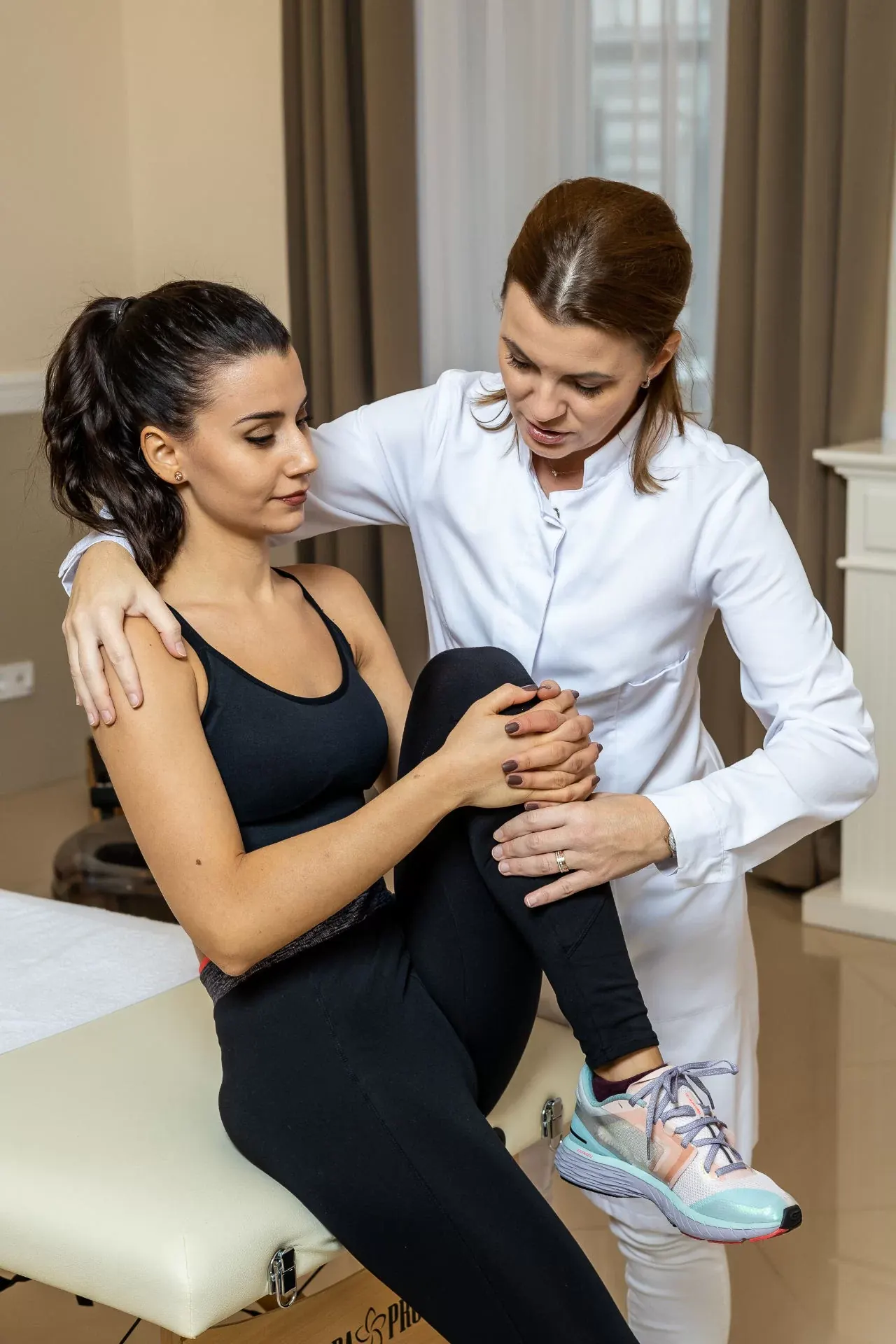
At our first meeting you tell us how long the complaint has lasted, when it gets worse, and what you have already tried. Then follows a thorough physical check-up, covering not just the sore spot but your posture, movement patterns and everyday load. We share the findings with you right away, put together your therapy plan, and treatment begins during this same visit.
Physical therapy
When pain makes it hard to even begin moving, physical therapy devices give you that first push. Without any medication it calms the complaint, lowers inflammation and boosts circulation in the tissue, so exercise becomes comfortable sooner. We only ever use it in a targeted way, as one piece of your therapy plan.
Physiotherapy
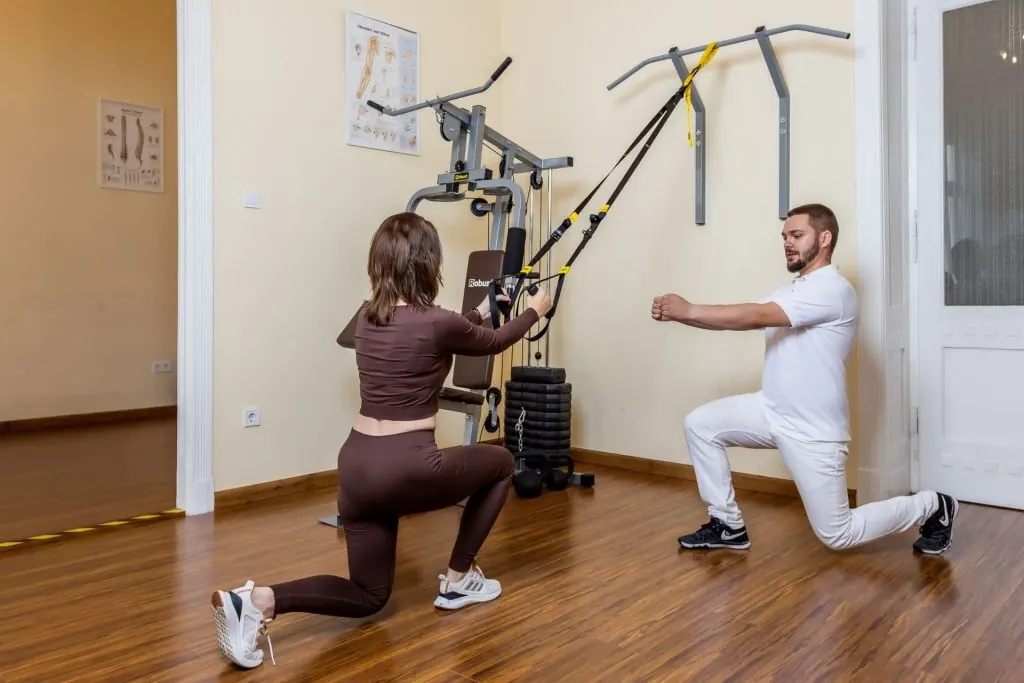
Physiotherapy is where lasting results come from: we don't only ease the symptom, we help you learn to move in a way that keeps the problem from returning. Our physiotherapists walk through every movement together with you, keep correcting your form, and hand you a home routine that actually fits your week.
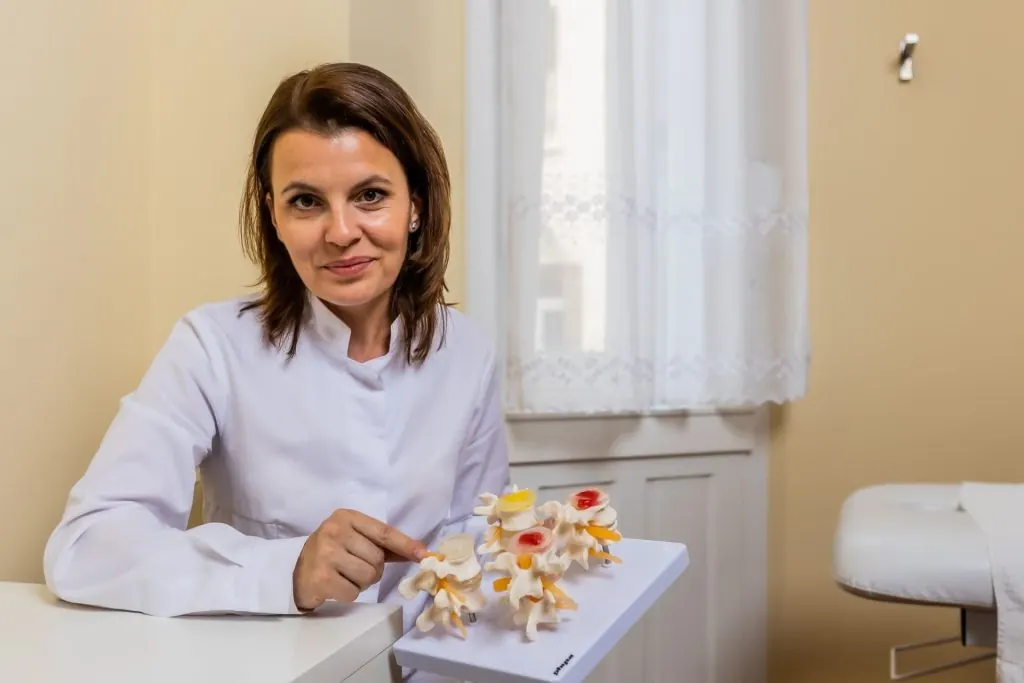
Manual therapy
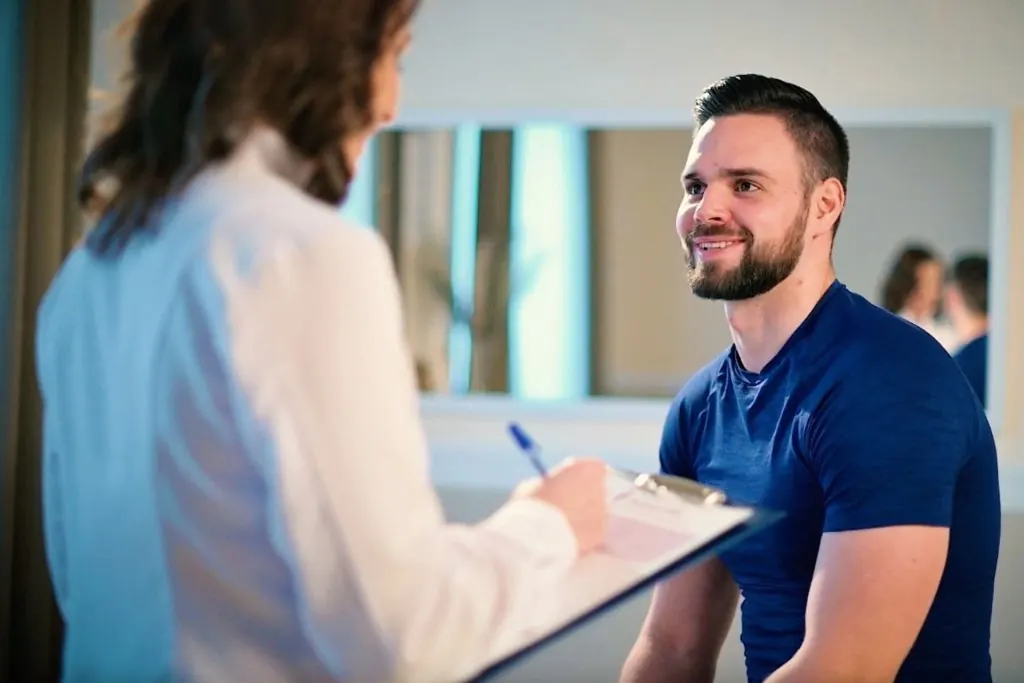
Manual therapy is entirely hands-off for you — the therapist's hands do the work. Targeted techniques free up stiff joints, tight muscles and the soft tissue holding your movement back. Many of our patients notice easier movement right after the first session, which we then lock in with physiotherapy.
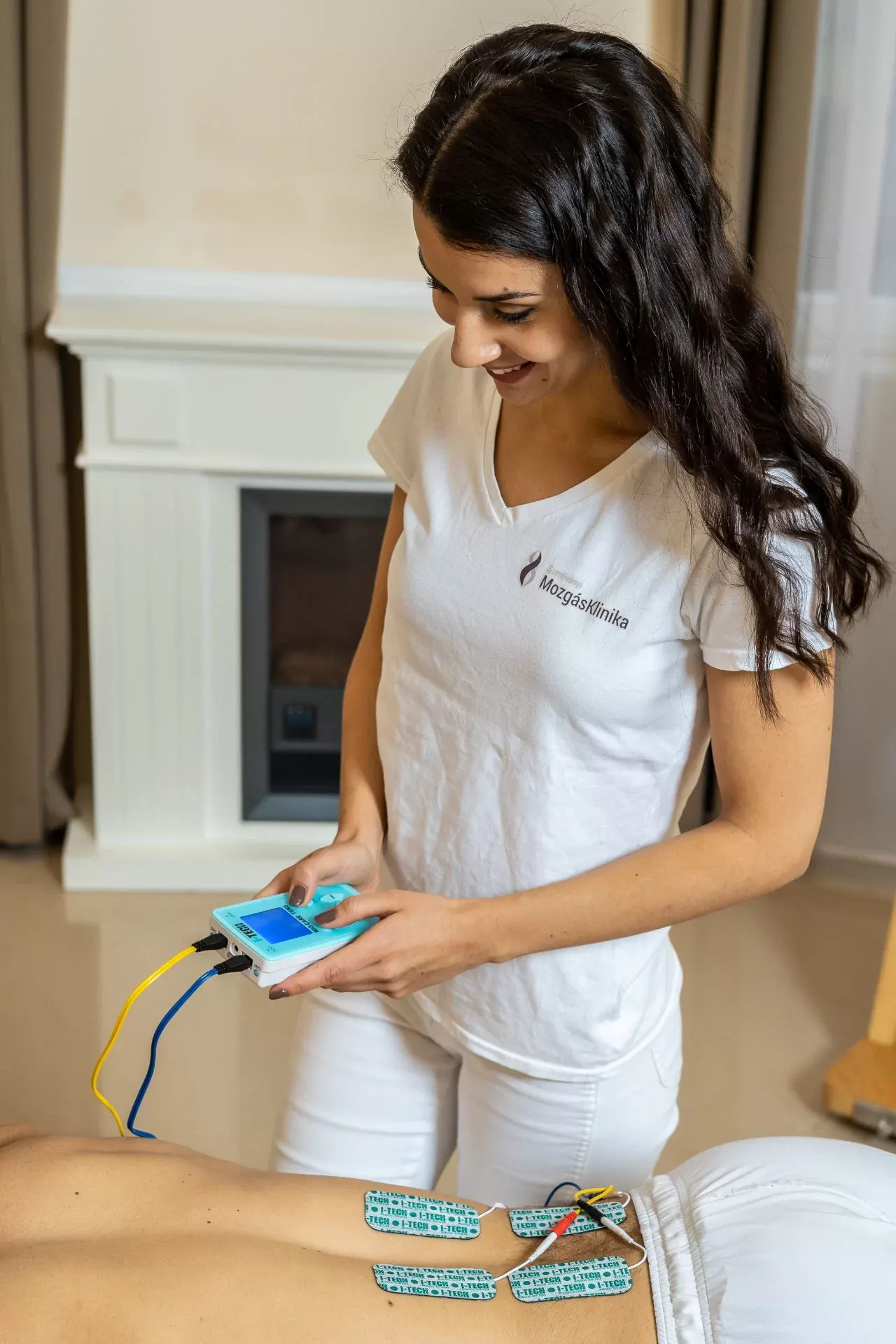
Manual therapy combined with physical therapy
For sharp, acute pain this combination is usually the quickest way forward: hands-on work restores your range of motion while device-based treatment settles inflammation and supports tissue repair. Our Buda clinics offer TENS, ultrasound, cupping and Flossing — your assessment determines which one fits.
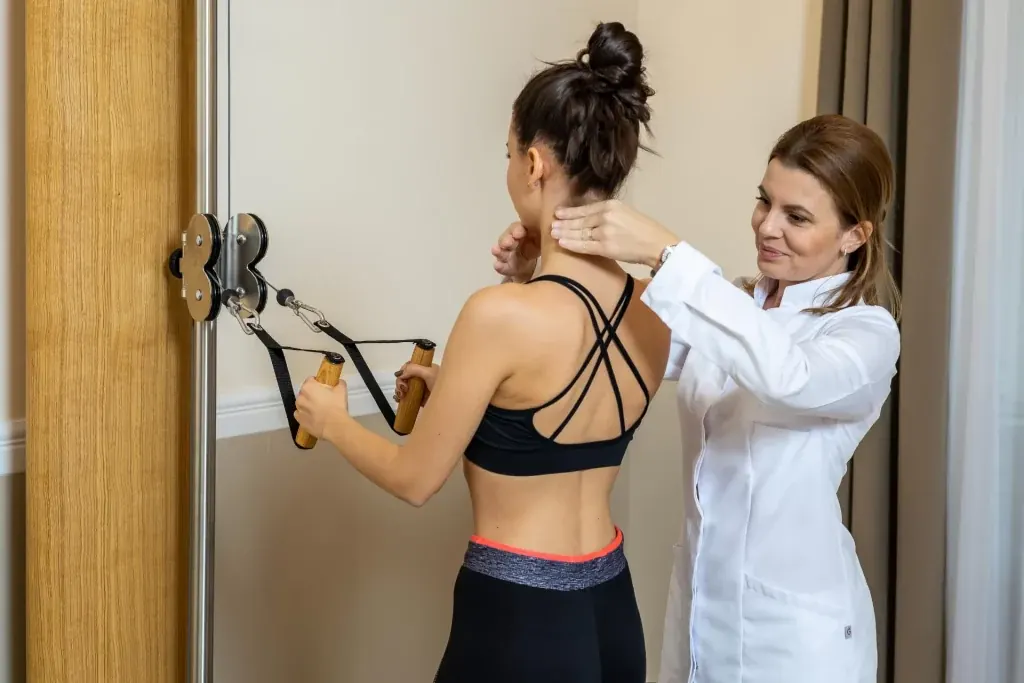
Manual therapy combined with physiotherapy
Passive and active work makes the strongest team: we free up the restriction by hand first, then immediately secure that fresh range of motion with exercise. This way the improvement doesn't fade over the next few days. We add this combination to your plan whenever the assessment points to it as the quickest path forward.
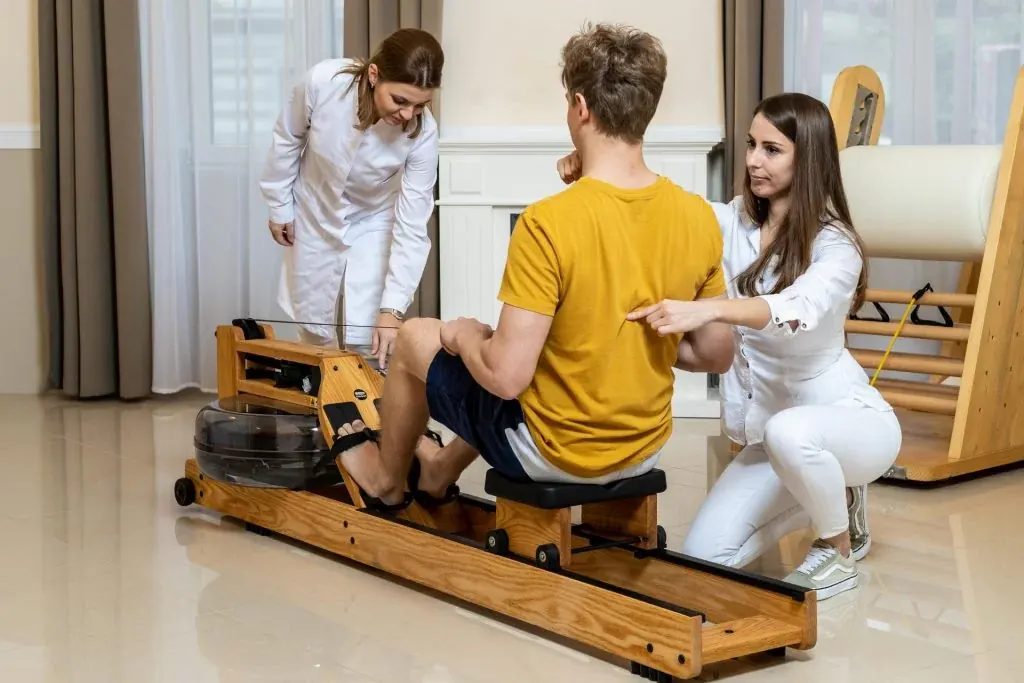
Medical Fitness training
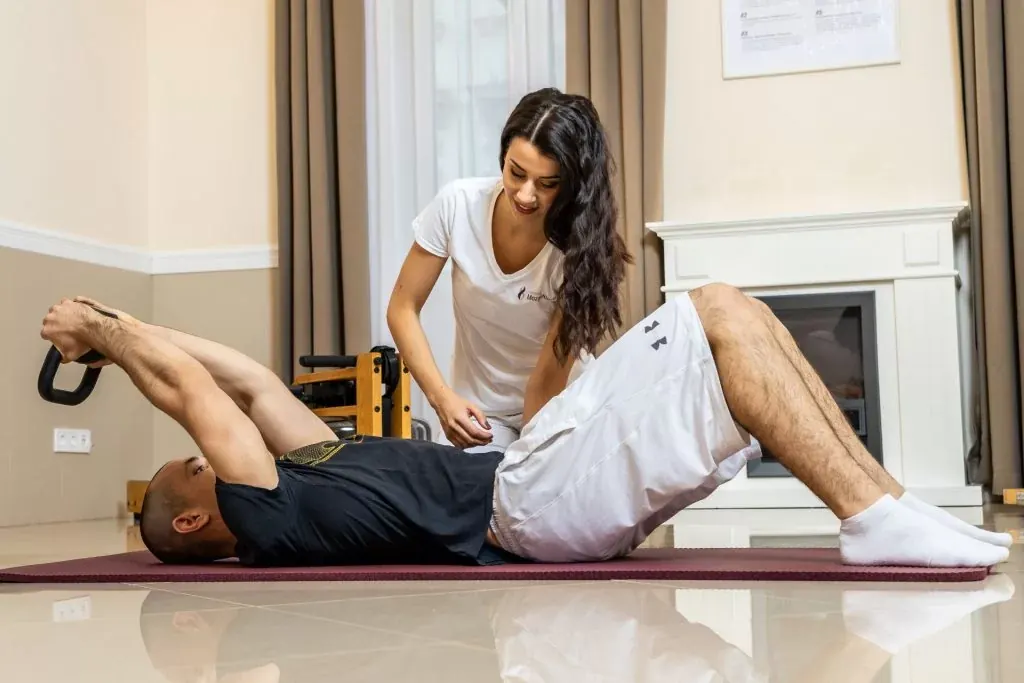
Once the pain has eased but your old capacity hasn't come back, this is where we pick up the thread. Medical Fitness pairs functional physiotherapy movements with cardio and interval work, always under professional supervision. It suits rebuilding strength after recovery, boosting endurance, or shedding weight — scaled to what your body can currently handle.
Sport-specific physiotherapy
Getting back after an injury isn't only about the pain disappearing — it's about whether your body can handle what your sport demands. So towards the end of rehab we also review sport-specific movement: changes of direction, jumps, take-offs. The aim is a confident return to the pitch or the gym with less risk of re-injury.
Book your place at our Buda clinics
Our Buda clinics from Pasarét to Budaörs welcome patients to a high professional standard. Book an appointment and your treatment begins on the very first visit.